


After the epidemic, the intelligent manufacturing industry chain service of transformer cores will usher in a spring.
2020-10-28
Currently, many countries adopt the popular transformer core cutting and distribution model, which is also a relatively advanced industrial chain service model that China has been paying attention to and learning from. In recent years, the development of intelligent manufacturing technology in China has accelerated the progress of intelligent manufacturing technology for transformer cores, and the COVID-19 pandemic has further promoted this progress. It is understood that LTC Group, the world's largest manufacturer of transformer cores (with an annual output of about 100,000 tons of transformer cores), has achieved the goal of expert core design, fully automated digital longitudinal and transverse cutting, logistics delivery, and one-stop service through its intelligent factory core manufacturing technology, greatly reducing direct human-to-human contact, while also ensuring the normal production of transformer factories.
During the epidemic, statistics on major domestic intelligent manufacturing enterprises of transformer cores (Wuxi Putian, Wuxi Julong, Dahong Electromechanical, Wuxi Zhongpu, Yancheng Guanghui, Taizhou Tianli, Taizhou Shenlong, etc.) showed that these enterprises produced a total of about 300,000 tons of transformer cores in 2019, of which the consumption of distribution transformer cores accounted for about 40% of the total national consumption of transformer cores, laying a solid foundation for China to provide industrial chain services for intelligent manufacturing of transformer cores.
The author believes that after the epidemic, driven by the "new infrastructure," the industrial chain service model for intelligent manufacturing of transformer cores will usher in a new era.
Five Key Technological Points of Intelligent Manufacturing of Transformer Cores
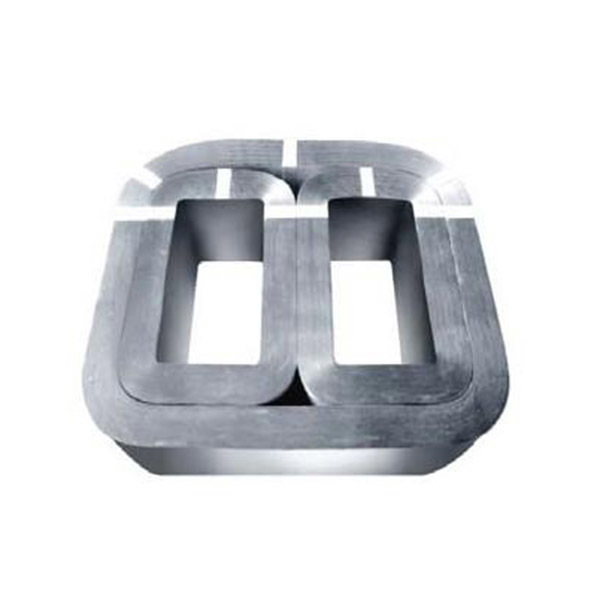
The main raw materials for transformer cores are silicon steel sheets or amorphous alloy strip materials. Here, we mainly analyze the process of processing silicon steel sheets into transformer cores. The transformer core itself is a design technology, which mainly includes the following design processes: steel coil data transportation → intelligent data storage → internal operation → fully automatic longitudinal and transverse cutting → robot core stacking and assembly → core shipment and storage. In this process, silicon steel sheets are all "soft contact," with no overhead crane handling, no personnel directly involved in production, and no personnel touching the silicon steel sheets, realizing full automation from the warehousing of silicon steel sheets to the completion of core finished product stacking.
Silicon steel sheets have a rather special characteristic: the internal grains are arranged in a regular directional manner, and the quality of magnetic conductivity is directly related to the directionality of their arrangement. In the process of manufacturing cores with silicon steel sheets, obvious stress will be generated, and the stress will cause the internal grains of the silicon steel sheets to be disordered, leading to a decrease in the unidirectional magnetic conductivity of the silicon steel sheets, and thus an increase in the unit loss of the silicon steel sheets. In view of this characteristic, the key technology of intelligent manufacturing of transformer cores aims to reduce the stress damage to silicon steel sheets in each link of the processing process and reduce the loss of transformer cores.
First, stress control and reduction. During the intelligent manufacturing and finished core transportation process, silicon steel sheets will undergo impacts, shearing, extrusion, stretching, and collisions, causing significant stress damage to the silicon steel sheets, and such damage is irreversible to a certain extent. Therefore, in the intelligent manufacturing and transportation process, all "hard contacts" must be changed to "soft contacts" to reduce stress generation.
Second, detection and material selection. Currently, there are more than 2,000 transformer enterprises in China. The performance of silicon steel sheets themselves will vary due to different manufacturers, production processes, and even different production batches. This requires intelligent manufacturing enterprises of transformer cores to test important parameters such as unit loss, magnetic induction intensity, stacking coefficient, bending resistance, coating adhesion strength, coating insulation strength, and material thickness uniformity of silicon steel sheets, fully understand the characteristics of different silicon steel sheets, and select the most suitable silicon steel sheets according to different transformer structures, different usage environments, and different processing technologies. For example, online thickness gauges, loss meters, coating insulation testers, and pinhole meters are used for longitudinal cutting to detect the surface quality, unit loss, material thickness, and coating insulation of silicon steel sheets. After longitudinal cutting, the silicon steel sheets can be subjected to secondary review and screening, and the production plan of the next process can be adjusted according to the measurement results; transverse cutting requires the use of automatic length measuring equipment and online stacking thickness measuring equipment to automatically adjust the monitoring results.
Third, environmental control and material protection. Silicon steel sheets are very susceptible to rust, especially at the cutting port. Rust will cause short circuits between iron chips, eddy current circulation, and increased iron loss or heat generation. Severe cases may even damage the insulation of adjacent parts due to excessive local temperature rise, and eventually burn out the transformer. In the processing process, the traditional rust prevention method is to apply rust prevention materials, but this method will have a certain adverse effect on the finished transformer. For example, in oil-immersed transformers, if rust-proof oil is applied to the surface of the core, it will cause the transformer oil medium loss to exceed the standard. Material protection has two aspects: First, coating protection. During the operation of the transformer, the lack of coating will increase the eddy current loss of the transformer and easily increase the probability of surface rust of the silicon steel sheet. Therefore, during handling and intelligent manufacturing, it is necessary to strictly control each process link to ensure that all materials in contact with the surface of the silicon steel sheet will not damage the surface coating. Second, surface cleanliness protection. In the intelligent manufacturing process, silicon steel sheets will inevitably be exposed to the air, and a certain amount of dust will accumulate on the surface. During cutting or punching, there will also be a certain amount of dust generated at the cutting section. If not cleaned in time, excessive dust accumulation will cause poor heat dissipation of the finished transformer, accelerate the aging of the transformer insulation, and shorten its service life.
Fourth, precision control. In the intelligent manufacturing process, each process should strictly control the precision of the corresponding processing dimensional parameters. The precision of various processing dimensions is particularly important in processes such as longitudinal cutting, transverse cutting, stacking, and assembly. In each process, many parameters need to be controlled, such as burrs, width error, straightness, cutting white edges, and end face flatness in the longitudinal cutting process, length error, burrs, and angle error in the transverse cutting process, window height error, window width error, diagonal line, distance error between the center lines of the upper and lower yokes of the core, and distance error between the center lines of each column in the stacking process. All these parameters must meet national standards while ensuring the consistency of each parameter itself to ensure that the impact of shearing stress on silicon steel sheets is minimized. In addition, higher processing precision can effectively ensure the performance of the finished core.
Fifth, surface treatment and finished product protection. First, due to the different transformer usage environments, operating conditions, noise level requirements, and service life, targeted treatment needs to be performed on the core surface. At the same time, considering environmental protection requirements, strict control is needed for the surface pretreatment of the core, the selection of coating materials, the control of corrosion resistance level, the selection of construction technology, and the overall aesthetics. Second, after the core is processed, it needs to be transported and temporarily stored. During this process, the entire core needs to be appropriately packaged and protected to ensure that the entire core is not affected by factors such as dust, moisture, rain, snow, and salt spray.
Intelligent Manufacturing Industrial Chain Service for Transformer Cores Will Become a New Model
Taking the intelligent manufacturing technology of transformer cores at Wuxi Putian Iron Core Co., Ltd. as an example, the company, established nearly 16 years ago, is currently the world's second largest intelligent manufacturer of transformer cores. Its factory has the most advanced longitudinal and transverse shearing automation systems and robotic stacking systems, as well as intelligent automated storage and retrieval systems, automatic sizing of silicon steel packaging, and automatic silicon steel waste material transfer systems. Supported by the MES/ERP (Manufacturing Execution System/Enterprise Resource Planning) information system, its factory achieves a high degree of automation, informationization, and intelligence in its internal material flow system and core manufacturing system. It has now formed an intelligent manufacturing capacity of 100,000 tons of cores and has taken the lead in formulating national standards for power transformer cores. Its advanced intelligent manufacturing technology for transformer cores has reduced "no-load losses" by about 3%, and has also greatly promoted the development of the service model for the intelligent manufacturing industry chain of transformer cores.
The intelligent core factory should start from intelligent manufacturing and transformer design, and be able to provide transformer companies with professional suggestions on core optimization design, cross-sectional filling factor, joint structure, fastening node method and fastening structure, material selection, and clamp system optimization. The optimized transformer core not only needs to meet the various installation dimensions of the transformer, but also needs to improve the performance of the finished transformer, while minimizing the use of silicon steel sheets.
This service model will better meet the needs of transformer enterprises, make rational use of social resources, achieve green manufacturing, create greater social value, and make the intelligent core factory truly the "first process" for transformer enterprises.
Recommended News
Contact Us
Online Message
* Note: Please fill in the information accurately and keep the communication open. We will contact you as soon as possible.