


How to select the sensor core? How to handle related failures?
2022-08-16
In addition to AC voltage conversion, special sensors have other uses, such as changing the power frequency, supplying power to rectifying equipment, welding equipment, electric furnaces, voltage transformers, current transformers, etc. Silicon steel is a silicon-containing steel (silicon is also called silicon), with a silicon content of 0.8% to 4.8%. Sensor cores use silicon steel because silicon steel itself is a magnetic conductive material with strong magnetic conductivity, which can generate a large magnetic induction intensity inside the conductive soft tube. Therefore, under the AC state of the oral sensor, the size of the sensor can be reduced. Under the magnetization of AC, it is also generated in the core. Sensor core The power loss in is usually called 'iron loss', which is caused by 'hysteresis loss' and 'eddy current loss'.
When the sensor is working, the magnetic flux generated by the AC in the coil is naturally alternating. The changing magnetic flux generates an induced current in the core. The induced current generated in the core flows in a plane perpendicular to the stator direction, so eddy current loss also causes the core to heat up. In order to reduce eddy current loss, insulated silicon steel sheets are stacked on the sensor core to make the current flow in a narrow loop, increasing the electrical limit on the eddy current path by a smaller cross-section; at the same time, the silicon in the silicon steel increases the resistivity of the material, which also reduces the eddy current.
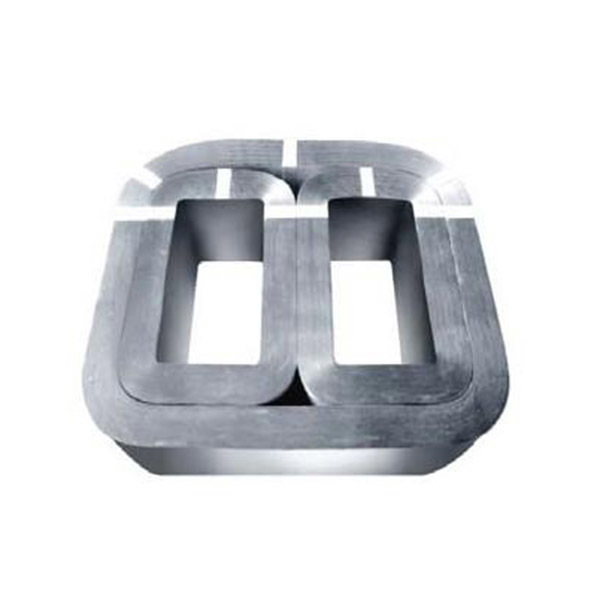
Generally, 0.35 mm thick cold-rolled silicon steel sheets can be used as the core material for sensor PE pipe fittings. According to the required core size, it is cut into long strips and then overlapped into a buckle shape. Theoretically, if the thickness of the silicon steel sheet is thinner and the splicing strip is narrower to reduce eddy current, the effect will be better and better. This reduces the loss caused by eddy current, reduces the temperature rise, and can also save silicon steel sheet material. When manufacturing silicon steel sheet cores, it is not only based on the theoretical factors of the above-mentioned favorable effects. Because they make such a core, it is necessary to greatly increase the working time of the product and reduce the effective control cross-section of the core. Therefore, when using silicon steel sheets to make sensor cores, it is necessary to study and weigh the various advantages and disadvantages according to the specific working conditions and choose the appropriate structural size.
Iron filings grounding is a common fault of sensors. After confirming that the sensor core has a multi-point grounding fault, the specific location of the fault point can be further identified. After hanging the cover, the grounding caused by debris is more intuitive and easier to handle.
The AC method connects the low-voltage winding of the sensor to an AC voltage, from 220 to 380. And there is magnetic flux in the sensor core. If there is a multi-point grounding fault, current will appear when measured with a milliammeter. Measure point by point along the yoke with a milliammeter. When the current in the milliammeter is zero, it is the fault point. This method of measuring current is more intuitive than measuring voltage.
If the above two methods cannot find the fault point, the iron filings pressurization method can also be used. Disconnect the normal grounding point of the core and apply voltage to the iron sheet with an AC testing device. If the fault point is not firmly contacted, a discharge sound will be heard during the pressurization process, and the fault point can be observed according to the discharge spark.
When the current of the test device increases, the voltage does not increase, and there is no discharge phenomenon, indicating that the grounding fault point is very stable. At this time, the current method can be used. Disconnect the normal grounding point of the iron sheet and energize the core with a welding machine. When the current gradually increases and the resistance of the fault point of the core is large, the temperature of the fault point will rise rapidly, and the sensor oil will decompose and smoke, so the fault point can be observed. Whether the fault point is eliminated can be verified by Sensor core Pressure test.
Recommended News
Contact Us
Online Message
* Note: Please fill in the information accurately and keep the communication open. We will contact you as soon as possible.