


Sensor cores are divided into two categories: "iron loss" and "copper loss"
2022-09-06
The input of any motor is not just input, there will be losses, and sensors are no exception. Generally speaking, Sensor core losses are divided into two categories: "iron loss" and "copper loss". Because iron loss is independent of the load, it is also called "no-load loss". Copper loss is proportional to the load, so it is also called "load loss".
No-load loss: Varies with frequency and magnetic flux density.
No-load copper loss: Loss caused by the internal resistance of the primary coil when the primary coil is energized. Because the excitation current is very small, about 1%, it can be ignored.
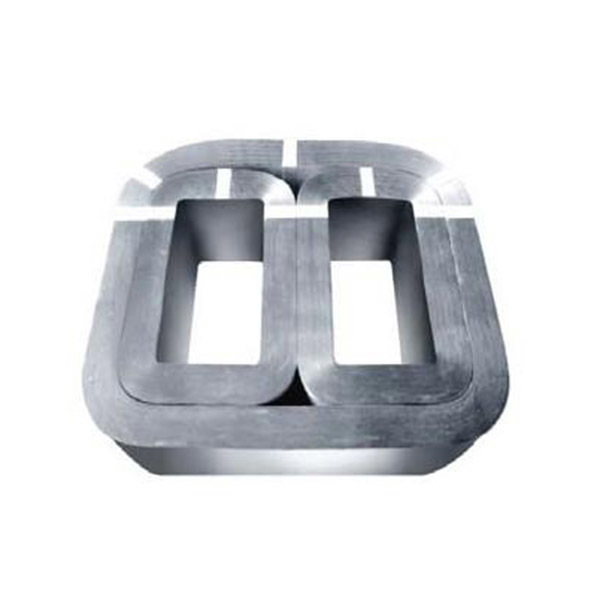
Hysteresis loss: Hysteresis loss is related to the material of the silicon steel sheet used in the core. It is related to the change of frequency, and hysteresis loss will increase with the increase of frequency.
Cavitation loss: Cavitation loss is related to the material and thickness of the silicon steel sheet used in the core and the surface insulation of the silicon steel sheet.
Load loss (copper loss, varies with load current and temperature)
Resistance loss: Includes the resistance loss of the primary and secondary coils, which varies with the load current.
Drift loss: Caused by sensor leakage magnetic flux.
The reasons for the loosening of the sensor core are as follows:
1. Large burrs around the silicon steel sheet, and the overlapping gap does not meet the requirements.
2. Disc errors lead to empty discs and overlaps, making it impossible to press the core normally after stacking.
3. The iron sheet is wavy and bent, so it cannot be clamped after stacking.
4. The sensor core manufacturer believes that the epoxy resin glass tape used to bind the yoke and core is of poor quality, improper process, insufficient constraint force, and poor curing, etc., resulting in loose binding, aging and failure of the binding hoop, causing the core to loosen.
5. The clamping bolts are not tightened, or anti-loosening washers are not installed, and they loosen after electromagnetic vibration operation, causing the core to loosen and the grounding copper sheet to fall off.
6. The sensor core manufacturer believes that if the clamping bolts are not tightened or there is slight vibration noise, tighten the bolts again with a large wrench until the noise is eliminated; if the noise is not eliminated, further measures need to be taken.
7. Sensor core The manufacturer believes that for the noise caused by a small number of empty sheets, overlapping heads, waves, bending, and damage of silicon steel sheets, the bolts should be retightened, or retightened with a gasket. If the sound disappears, you can do it; otherwise, you have to disassemble the core, reselect the silicon steel sheets, and then re-stack the core for pressing. When selecting silicon steel sheets, two sheets should be stacked; if one or three sheets are inserted incorrectly, two sheets should be replaced; select laminates of the same thickness; pick out bent sheets, fragments, and silicon steel sheets with severe waves for backup; large silicon steel sheets with burrs need to be deburred again, and the burrs should be less than 0.03 mm before stacking.
8. Faults such as damage, aging, and loosening of the epoxy resin glass fiber tape should be re-bound, and the material should be qualified. When binding, first use a temporary steel hoop to tighten it, and after binding to a certain thickness, dry and cure it to form a hard whole, and then remove the temporary steel hoop.
Recommended News
Contact Us
Online Message
* Note: Please fill in the information accurately and keep the communication open. We will contact you as soon as possible.