


Sensor core manufacturer: Core processing and characteristics
2022-10-02
Sensor core Manufacturers believe that amorphous alloys have advantages such as high saturation magnetic induction intensity, low coercivity, and low loss, and are widely used in energy-saving and environmentally friendly power transformers. Currently, amorphous alloy cores adopt a near-rectangular stacked structure. The internal stress of the formed core is very large, and the magnetic properties are severely damaged. Therefore, heat treatment and annealing are required to eliminate these stresses.
Sensor core manufacturers believe that the annealing process is a crucial and difficult-to-control process in the entire manufacturing process of amorphous alloy cores. Domestic amorphous alloy strips have greater transverse bending and internal stress than imported strips. In addition, due to their different compositions, they are more sensitive to the temperature during the heat treatment process. Therefore, formulating a suitable heat treatment and annealing process is crucial to the core performance and quality of domestic amorphous alloy strips.
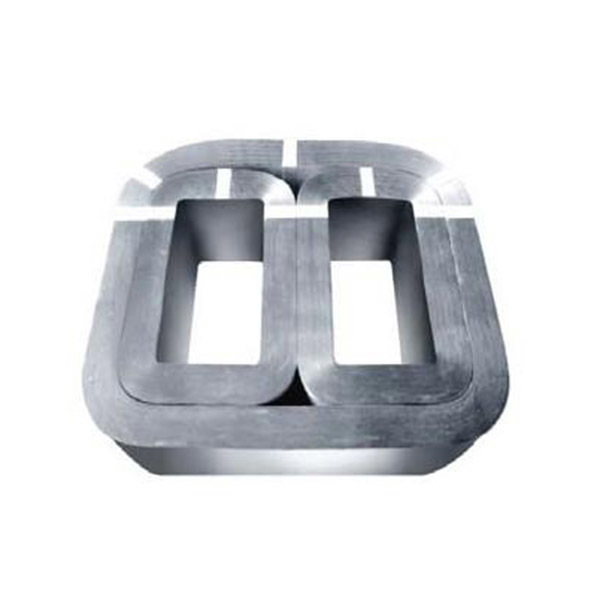
Sensor core manufacturers believe that the appropriate annealing temperature of the core should eliminate the internal stress of the core, restore its magnetic properties, and minimize the brittleness of the amorphous alloy strip, reducing the risk of core fracture during subsequent operation. Experiments show that the annealing temperature of domestic amorphous alloy strip cores should be controlled at 375~380.
Sensor core manufacturers believe that the unit excitation power decreases with the extension of the annealing time, while the unit no-load loss of the core increases with the extension of the annealing time, and the brittleness of the core strip also increases with the extension of the annealing time. Therefore, it is necessary to select the appropriate holding time according to the user's requirements for core material performance.
The core is prone to oxidation during high-temperature heat treatment and annealing. After the surface of the core is oxidized, in addition to surface rust, more importantly, the no-load loss of the core will increase significantly. Therefore, the core must be protected by the atmosphere during the entire heat treatment and annealing process. Commonly used protective gases are nitrogen or argon.
Sensor core manufacturers believe that because the core must undergo multiple loads and batch heat treatments during mass production, a reasonable heating and cooling rate will not only affect the performance results of the amorphous alloy core but also affect production efficiency and production costs. Generally speaking, the faster the heating rate, the greater the dispersion. However, experiments show that when the domestic amorphous alloy strip core reaches the high-temperature zone and approaches the appropriate annealing temperature point, the temperature dispersion is small, and can be controlled within 3. Therefore, in the heating stage, the domestic amorphous alloy strip core can be directly and rapidly heated. In addition, a fast cooling rate helps reduce the no-load loss of the core, but it also increases the excitation power of the core. Therefore, the cooling rate requires accumulated experience data to make a suitable choice.
The above is about Sensor core Some knowledge points, I hope everyone can seriously learn and understand the relevant knowledge.
Recommended News
Contact Us
Online Message
* Note: Please fill in the information accurately and keep the communication open. We will contact you as soon as possible.