


Sensor iron core manufacturer: Knowledge points of inductor iron core
2022-10-17
Sensor Core Manufacturers consider inductors to be very important components in switching converters, such as energy storage and power filtering. There are many types of inductors, for example: used in different applications (from low frequency to high frequency), or the characteristics of the inductor are affected by different core materials, etc. Inductors used in switching converters belong to high-frequency magnetic components, but due to various factors such as materials, operating conditions (such as voltage, current), and ambient temperature, their characteristics and theoretical differences are large. Therefore, in circuit design, in addition to the basic parameter of inductance value, the relationship between inductance impedance and AC resistance and frequency, iron loss and saturation current characteristics should also be considered.
Sensor core manufacturers believe that according to the shape of the inductor core, there are toroidal, E-type, and pot core types. According to the material of the core, there are mainly two types: ceramic cores and soft magnetic materials, namely ferrite and powder cores. According to different structures or packaging methods, there are wound type, multilayer type, and stamped type. Wound types include unshielded type, semi-shielded type with magnetic glue, and shielded type.
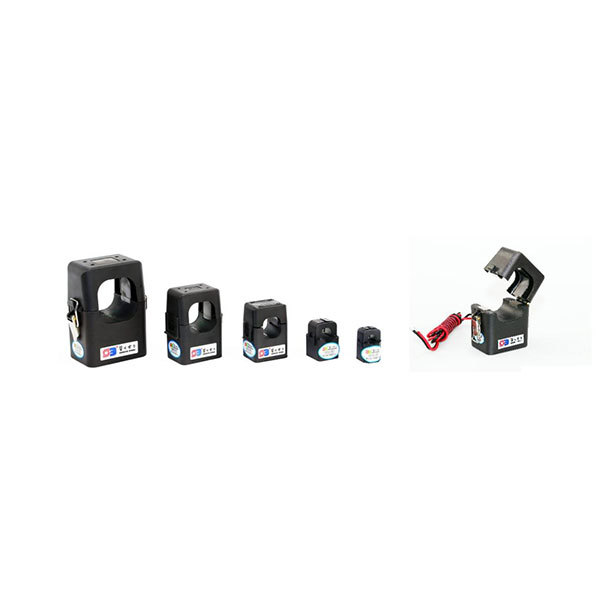
Sensor core manufacturers believe that inductors are similar to short circuits in DC current, but they present high impedance to AC current. Their basic applications in circuits include choking, filtering, tuning, and energy storage. In switching converter applications, inductors are very important energy storage components, forming a low-pass filter with the output capacitor, reducing the ripple of the output voltage, and therefore also playing an important role in the filtering function.
Sensor core manufacturers believe that inductors used in switching converters belong to high-frequency magnetic components, and the core material has a great impact on the characteristics of the inductor, such as impedance and frequency, inductance value and frequency, or core saturation characteristics. The following introduces several common core materials and a comparison of their saturation characteristics, as an important reference for selecting power inductors:
1. Ceramic core. Sensor core manufacturers believe that ceramic cores are one of the common inductor materials, mainly used to provide a support structure for coil windings, also known as "air core inductors." Because the core used is a non-magnetic material, the temperature coefficient is low, and the inductance value is very stable within the operating temperature range. However, due to its low inductance using non-magnetic materials as the medium, it is not suitable for power converter applications.
2. Ferrite. Sensor Core Manufacturers believe that the ferrite cores used in high-frequency inductors are generally ferrite compounds containing nickel-zinc (NiZn) or manganese-zinc (MnZn), which belong to soft magnetic materials with low coercivity. The coercivity HC of magnetic materials, also known as magnetizing force, refers to the magnetic field strength required for the magnetic material to be magnetized to saturation and then the magnetization intensity to drop to zero. Lower coercivity means lower resistance to demagnetization, which also means lower hysteresis loss.
Recommended News
Contact Us
Online Message
* Note: Please fill in the information accurately and keep the communication open. We will contact you as soon as possible.